Megarian Banded Centipede
Scolopendra cingulata
The Megarian Banded Centipede has about twenty body segments with each segment having a pair of legs. They are very agile creatures and able to move with surprising speed. The centipede in the video was captured by my friend as it was climbing up an interior wall of her house. It was photographed and released unharmed into the countryside. I don't know who was more scared, me or it. A large pair of claw-like venomous maxillipedes are used to capture and paralyze insects, crickets, grasshoppers, small lizards and frogs.
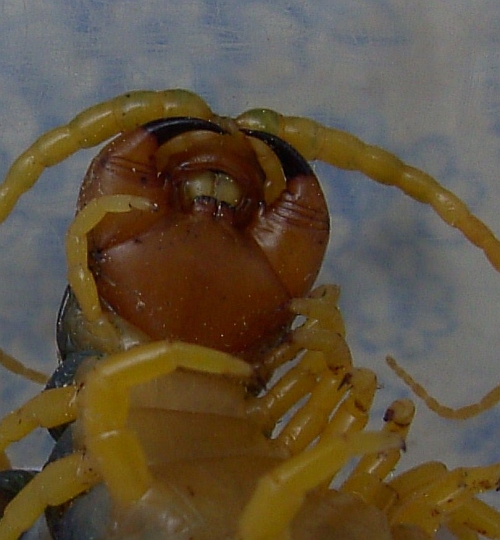
The bite from one of these creatures has been likened to a very bad wasp or bee sting and can cause painful swellings and in some cases anaphylactic shock requiring medical attention. You may need to use an antihistamine and applying an ice-pack may help
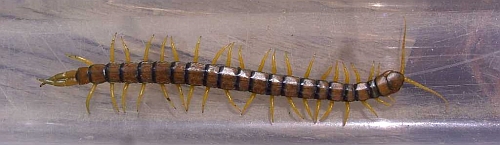
The centipede is generally a nocturnal creature spending it's days in dark places such as under a pile of stones, logs or cavities and holes in the ground and old buildings. After seeing a few of these things now, I do have a tendency to check my bed before jumping in, and checking my boots and clothing before getting dressed.
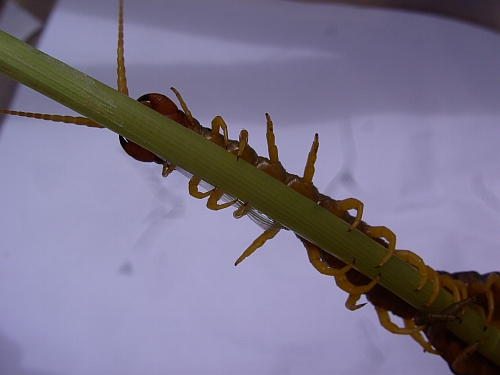
This photo shows how the centipede can climb anything very easily. With about forty legs that end with very sharp looking feet they can cling onto anything with amazing tenacity. When attacking, the centipede will lunge at it's victim and wrap it's body around the prey, whilst grabbing hold with as many of its feet as it can. The next meal is paralysed by the venomous bite and death is fairly quick.
The Megarian Banded Centipede has been described as aggressive and will defend it's self vigorously against predators and inquisitive animals like pet cats and dogs. Parents should also warn children against playing with them. Look but do not touch is pretty good advice.
See also
David Back
I just had one fall out of my shoe after a late walk in Portugal
I gently placed it outside then researched it
Think I’m a bit lucky !
Caroline Pritchard
I found one in my bedroom, unfortunately it scuttled under the wardrobe. My husband has sealed every crack in the wardrobe, so hopefully it is trapped in there and will die in the enclised space. It was about 5cm long. I am worried about it in case its able to get out and my cat lives in the bedroom mostly being old! Do you think it will die in thete? Its totally sealed in. Thanks I woukd be grateful for a reply.
Keith Simkins
My experience with one of these was in the middle of the night a couple of years ago when I was awoken as it bit me and as you say it was very painful and lasted a fair few days but my probem is that even now I have a sore tender red patch on the top of my head where it bit me. Any suggestions why?
Selwyn
Post authorYou are very welcome Chris.
If anyone has any useful information and or had experiences with the Megarian Banded Centipede I would love to hear from you. Thanks
Chris
I have come across two of these by our back door in the last two days ,one small and one much larger. This information and advice has been very useful.Thanks.